One question comes up on almost every guided visit, usually from a seven-year-old: which dinosaur was the smartest? The short answer is probably Troodon, a meat-eater about the size of a large dog with a disproportionately large brain. The longer answer is much more interesting, because it forces us to confront an awkward fact: we cannot measure intelligence precisely even in a living animal, so doing it in one that has been dead for 66 million years means drawing conclusions from bones.
What we do have are skulls. A well-preserved skull retains the shape of the cavity where the brain once sat. By filling that space, formerly with plaster and now through CT scanning, palaeontologists produce an endocast, a three-dimensional model of the brain’s volume. Then the work of comparing, estimating and debating begins.
This article explains how scientists estimate dinosaur intelligence, which species sit at the top of the ranking, how they compare with a modern crocodile or crow, and what the evidence now says about one of cinema’s favourite ideas: raptors hunting as a coordinated pack. A warning before we begin: that final part has changed considerably over the past fifteen years.
How do you measure the intelligence of an extinct animal?
Brain size alone tells us very little. A sperm whale has the largest brain on the planet and does not write poetry. Scientists therefore use the encephalisation quotient, or EQ, a formula that compares an animal’s actual brain size with the size expected for its body weight within its group. A larger-than-expected brain produces a higher EQ; a smaller one produces a lower score.
For dinosaurs, EQ is calculated using reptiles as the reference. An EQ of 1 means “exactly the brain expected for a reptile of this size”. Above 1 means a relatively large brain; below 1, a relatively small one. It is useful, but there is a catch: it depends on estimating the animal’s body weight accurately. A dinosaur’s weight comes from bones and models, not a set of scales. A 30% error in body weight shifts the entire EQ calculation.
There is another problem. In many dinosaurs, the brain did not fill the whole cranial cavity; tissues and sinuses occupied part of the space. A modern crocodile’s brain fills around half the available cavity. In birds, it fills almost all of it. Dinosaurs lie somewhere between the two, and the proportion assigned to brain tissue can alter the final result significantly. This choice is one of the main reasons studies disagree.
A new approach has emerged in recent years: estimating the number of neurons instead of volume. A widely discussed 2023 paper proposed that some large theropods had bird-like neuronal densities, which would imply considerable cognitive ability. Much of the palaeontological community responded cautiously because the calculation relies on too many linked assumptions. The debate remains open, as it should.
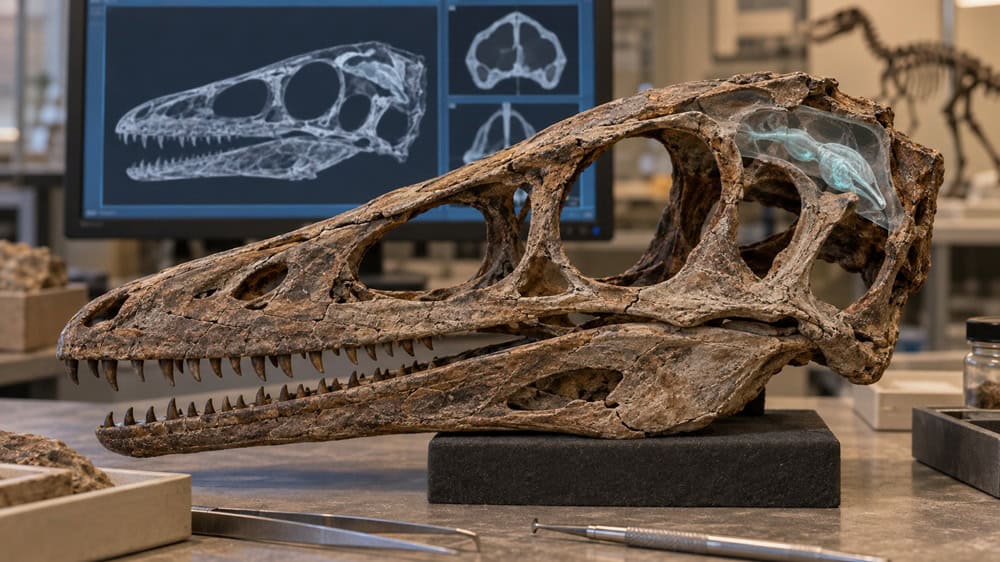
The ranking: which dinosaurs had the most developed brains?
With all those caveats in mind, the same order appears repeatedly in the scientific literature:
- Troodon. The traditional champion. It was about 2 metres long, weighed roughly 50 kilograms and had an estimated EQ five to six times that of a reptile its size. It also had large, forward-facing eyes for binocular vision and hands capable of grasping. It lived in North America around 75 million years ago.
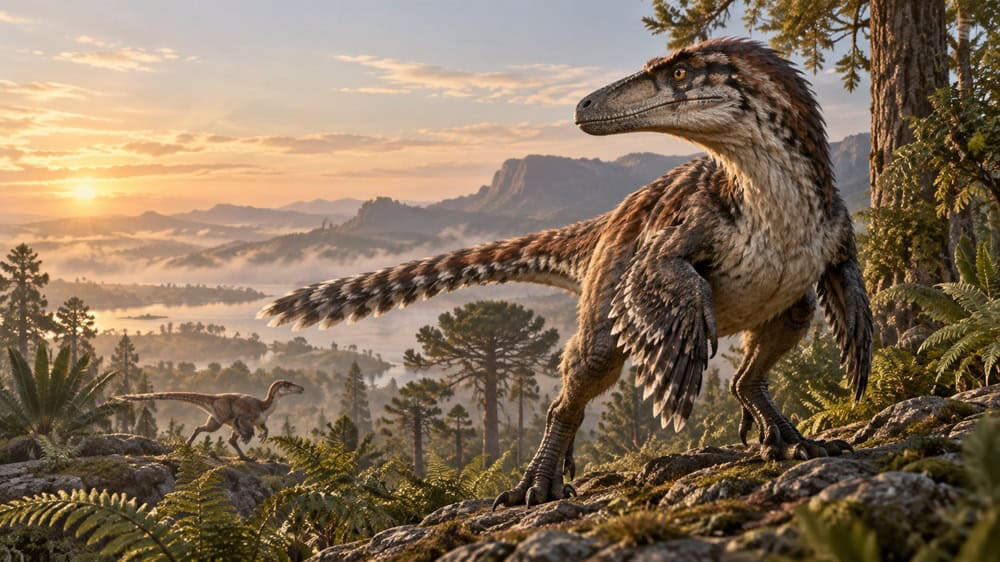
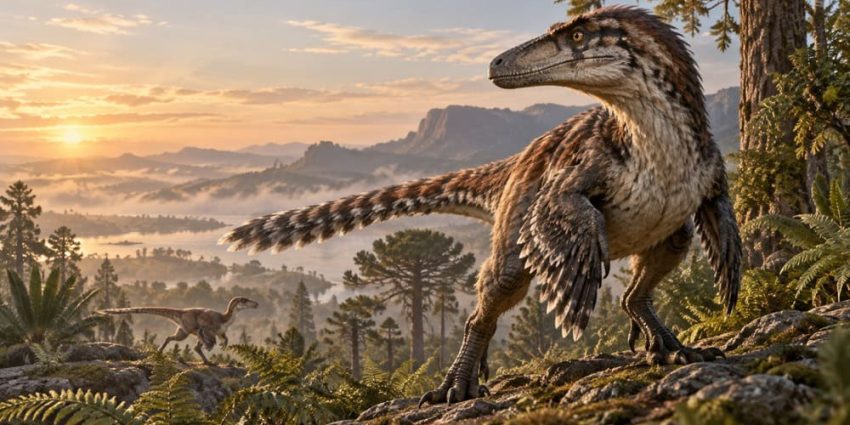
- Deinonychus. The dromaeosaur that inspired the “raptors” of cinema. Around 3 metres long and 70 kilograms, with an EQ well above the dinosaur average and sophisticated hunting behaviour.
- Velociraptor. Smaller than its relative at about 2 metres and 45 kilograms, but with a similarly high brain-to-body ratio. It is a perfect example of why size and intelligence are not the same thing.
- Oviraptor and its relatives. Relatively large brains, fossil evidence of parental care from adults brooding nests, and flexible diets. Their behaviour was complex, not merely a question of processing power.
- Tyrannosaurus rex. This surprises many people, but its EQ was notably high for a seven-tonne animal. It also had huge olfactory bulbs and good binocular vision. It did not reach Troodon’s level, but it was far from stupid.
At the other end are the giant sauropods and stegosaurs, with tiny brains compared with bodies weighing many tonnes. This is where the myth of Stegosaurus having a “walnut-sized brain” comes from. In its case, the exaggeration is not enormous: the brain weighed about 80 grams in an animal of more than two tonnes. That does not make it an evolutionary failure. An armoured herbivore that grazes and defends itself does not need to solve puzzles. It needs to eat and avoid being killed, and its brain was enough for that.
▸One pattern runs through the whole list: the dinosaurs with the highest EQ were small, agile carnivores, the same group from which birds descended. Hunting prey that moves, dodges and hides requires more processing than stripping leaves from a fern. Intelligence appears where it is needed.
Compared with animals today
Expectations need to come down here. No non-avian dinosaur probably reached the cognitive level of a chimpanzee or dolphin. Troodon was likely more capable than any living reptile and perhaps within the range of less specialised birds such as a chicken or pigeon. A crocodile, with an EQ close to 1, falls well behind, although crocodiles still display complex behaviour such as cooperating during hunts and using twigs as lures.
The real benchmark lies elsewhere. Corvids and parrots, including crows, magpies and macaws, are direct descendants of this lineage and comfortably surpass every known extinct dinosaur. They make tools, plan for the future and recognise themselves in mirrors. Put another way, the smartest dinosaur ever to exist is not in a museum. It is perched on a power line, watching you eat.
Did they really hunt in packs?
This is where cinema and science part company. The idea began in 1964, when palaeontologist John Ostrom found the remains of several Deinonychus in Montana beside the skeleton of a much larger Tenontosaurus. The immediate interpretation seemed obvious: a coordinated group bringing down large prey. That image transformed our view of dinosaurs and eventually reached the big screen.
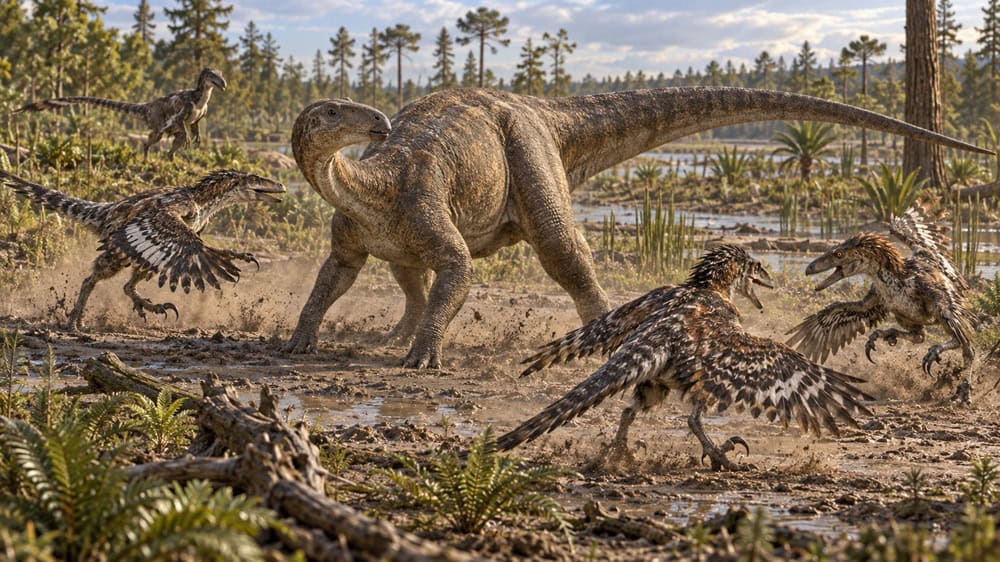
Since 2007, that reading has become more nuanced. Research into living predators shows that true cooperative hunting is extremely rare outside mammals and a handful of birds. Reptiles more often engage in something closer to mobbing: several individuals arrive at the same prey, attack without much organisation and frequently fight one another over the food. That behaviour would also leave several Deinonychus skeletons beside a Tenontosaurus, and it would explain why some of those bones bear bite marks from their own species.
The strongest challenge came in 2020. A study of carbon isotopes in Deinonychus teeth from different age groups found that juveniles and adults ate different foods. In species that truly hunt in structured packs, adults feed their young and the group shares a similar diet. If the young fed independently, they were probably not part of an organised family unit.
The current consensus falls between the two extremes and is more realistic than either. Dromaeosaurs were social animals. They tolerated one another, probably gathered around the same prey and benefited from the situation. But there is a considerable leap from that to the famous kitchen scene with three raptors carrying out a plan, and the evidence does not support it. That does not make them any less impressive. A disorderly group attack on an animal four times larger is still extraordinary.
Frequently asked questions about dinosaur intelligence
Which dinosaur was the smartest?
Troodon is the most widely accepted candidate. It had the highest known encephalisation quotient among non-avian dinosaurs, five to six times the value expected for a reptile its size, as well as binocular vision and grasping hands.
Was Velociraptor really intelligent?
Yes. It had one of the best brain-to-body ratios among dinosaurs. It was not as intelligent as the films suggest, however: it did not open doors or solve planned problems. Its abilities were probably closer to those of a less specialised modern bird.
How do scientists know the size of a dinosaur’s brain?
They use endocasts, models of the inside of the skull that are now produced through CT scanning. The volume is combined with an estimate of body weight to calculate the encephalisation quotient.
Did dinosaurs hunt in packs?
There is evidence of social behaviour and of several individuals gathering around the same prey. Recent studies, however, point more towards disorganised group attacks than coordinated hunting like that of wolves. The debate is still open.
Was Stegosaurus stupid?
Its brain was very small for its body, weighing around 80 grams. It did not need a larger one: it was an armoured herbivore whose way of life did not require complex problem-solving.
Are any intelligent dinosaurs alive today?
Yes. Birds are dinosaurs, and crows and parrots surpass every known extinct dinosaur. They make tools, plan ahead and solve multi-step problems.
See the brainiest dinosaurs of the Cretaceous at Dinosaurland
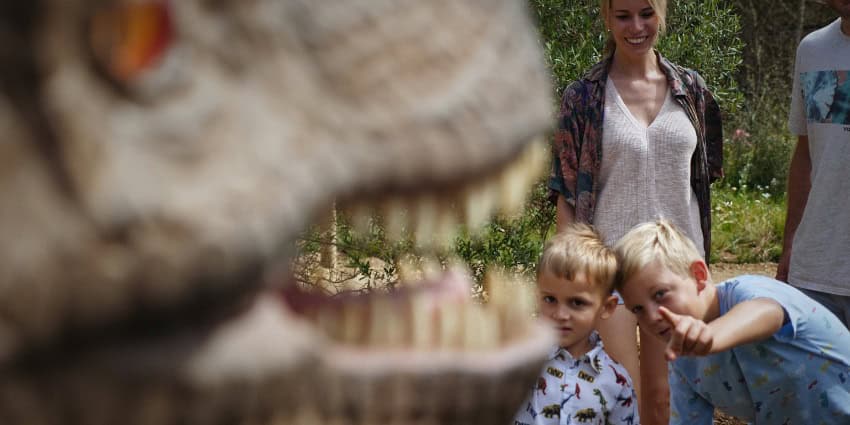
At Dinosaurland, you can stand in front of life-sized versions of the two main animals in this story and notice something an article cannot fully convey: how small and agile they really were. Read the full Velociraptor profile, with its true size and feathers, and the Deinonychus profile, featuring the larger relative that cinema turned into the raptor everyone recognises.
This is one of the best stops for children because the difference between what they expect and what they see starts a conversation on its own. Book tickets online to avoid queues and check the latest opening times on the official website before visiting. To make a full day of it, the Dinos & Caves package combines Dinosaurland with the Cuevas dels Hams: dinosaurs in the morning and an underground lake in the afternoon, all near Porto Cristo.
Dinosaur intelligence was not a cinematic superpower. It was a tool that developed exactly where it was needed: in the small, fast, feathered hunters from which birds descended. Visit Dinosaurland and meet the brightest minds of the Cretaceous up close.