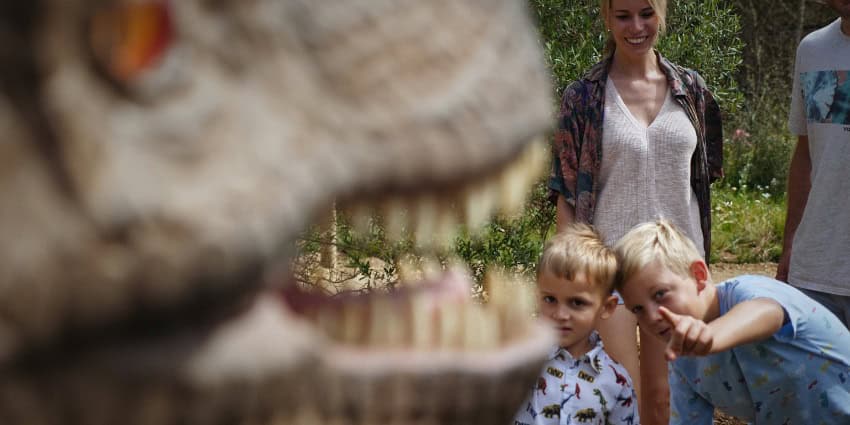
There is a moment that happens with almost every child who walks into Dinosaurland, and it comes sooner than you would expect. They are wandering along between the pines, only half paying attention, and something the size of a bus turns its head towards them and roars. That is where the conversation with their parents ends and the real visit begins.
This guide is written from that side of things: not what the park contains, but what your child is actually going to love at the age they are now. Which dinosaur will stay with them, which activity will hook them, how long you are really going to be there, and the things parents who have already been would do differently a second time.
The basics, in thirty seconds
Dinosaurland is an open-air dinosaur park in Porto Cristo, Mallorca, with more than 100 life-size replicas of around 40 species spread through a pine wood. The route is walked, flat and self-guided, takes around an hour and a half, and includes a fossil dig area for children and a live show. The adult ticket costs €18.50 online and the child ticket, ages 3 to 12, €12.50; under-3s go free. It works especially well between 4 and 10, though there is something for every age.
Why it works with children
What hooks them is not the number of pieces, it is that they move. Many of the replicas are animatronic: they have sensors that trigger when someone comes close, and then they turn their heads, open their mouths and roar. A child does not tell that apart from standing in front of the animal.
The layout helps too. It is self-guided and free-flowing, with no group and no guide setting the pace, so you stop where you want, skip what bores them and go back as many times as you need to. With small children, going back always happens: there is one dinosaur they like more than the rest and they want to see it again before leaving.
And it is a walk between trees, shaded for a good part of the way, rather than a series of closed rooms. In summer that difference is very noticeable.
Which dinosaur will they love, by age
This is the part no guide tells you and the part that decides how the day goes. Not every dinosaur lands the same way at every age, and knowing that in advance saves a few tears.
Ages 2 to 4: the big, calm ones
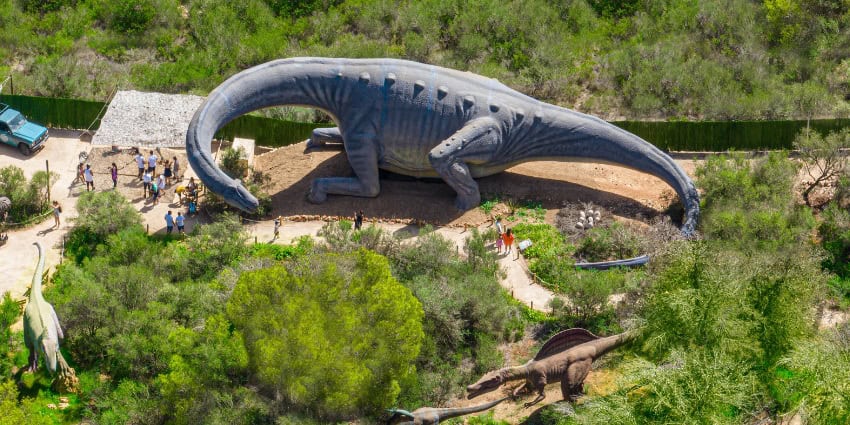
At this age it is size that impresses, not teeth. The twenty-metre Titanosaur is visible from a distance and is the one they point at most: it is so big that it is not frightening, only astonishing. The Brachiosaurus and the Diplodocus work just as well, long-necked herbivores with slow movements.
The Triceratops tends to be the favourite of the youngest ones. It has the face of an animal they recognise, horns they can point at and count, and it does nothing threatening.
With the big carnivores it is worth giving them warning: “the next one roars”. Plenty of children love it; some do not, and that one sentence completely changes the reaction.
Ages 5 to 8: the sweet spot
This is the age band the park feels designed for. They already know the names, they already have favourites before they arrive, and they want to check whether the real thing looks like the one in the book.
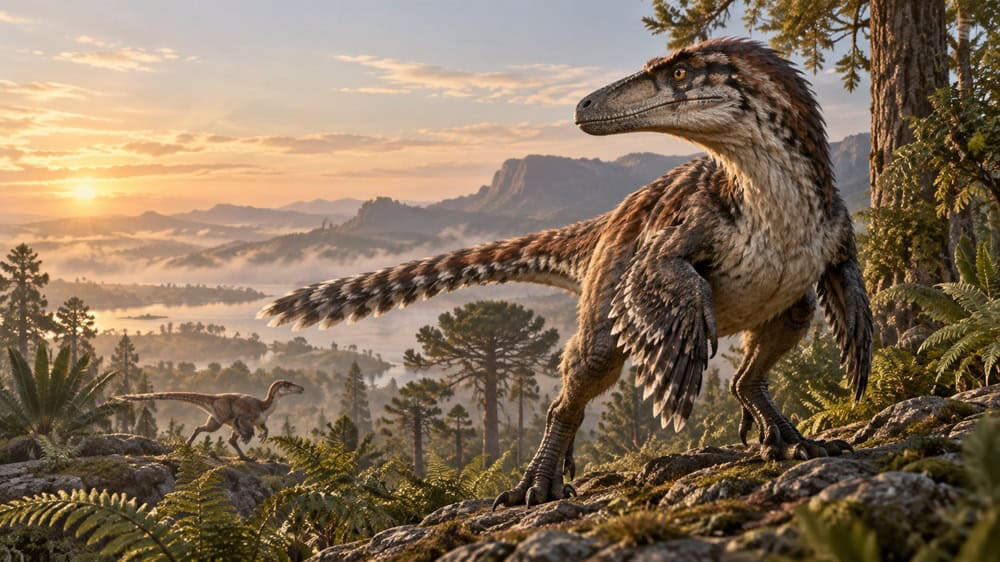
Tyrannosaurus rex is the one everybody is looking for, and seeing it life-size rearranges the idea they had of it. The Velociraptor surprises them for the opposite reason: it is far smaller than the films led them to believe, and that conversation — why the cinema made it bigger — will keep going the whole way home.
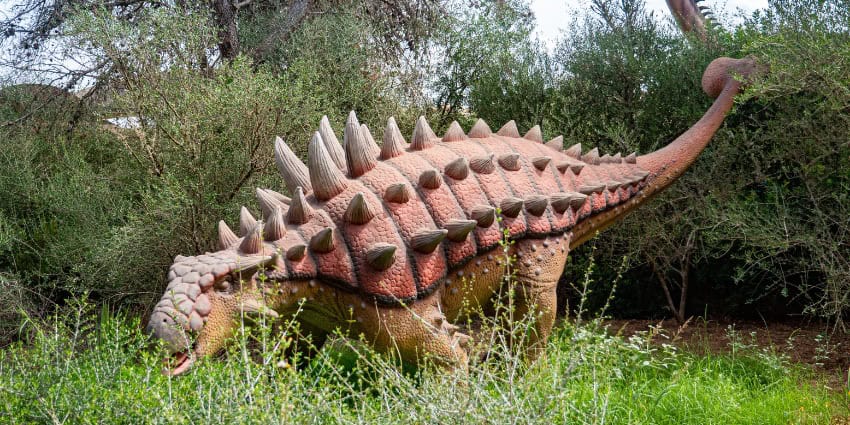
Then there are the ones they discover here and had never heard of: the Stegosaurus with its plates, the armoured Ankylosaurus with the club on its tail, or the Parasaurolophus and that hollow crest that worked like an instrument.
Ages 9 to 12: the facts and the oddities
By this age big is not enough on its own: they want to know why. This is when the individual species pages come into their own, along with comparing sizes and asking the hard questions.
The winners here are the Spinosaurus, with its dorsal sail and its half-aquatic life, and the Compsognathus, which at roughly the size of a chicken forces them to rethink the whole idea of “dinosaur”. The Pteranodon opens up the conversation about flying reptiles not being dinosaurs at all, which is exactly the kind of distinction this age loves.
The full list of the species in the park, with a page for each one, is in the dinosaurs section. Looking through it at home before you come turns the visit into a treasure hunt.
Teenagers
They arrive announcing that this is for little kids and end up taking photos. What works with them is giving them a job: let them hold the map, let them hunt down the less famous species, let them decide the route. The map is handed out at the ticket desk and is also on the park map page.
The Explorer Zone, where you will struggle to get them out
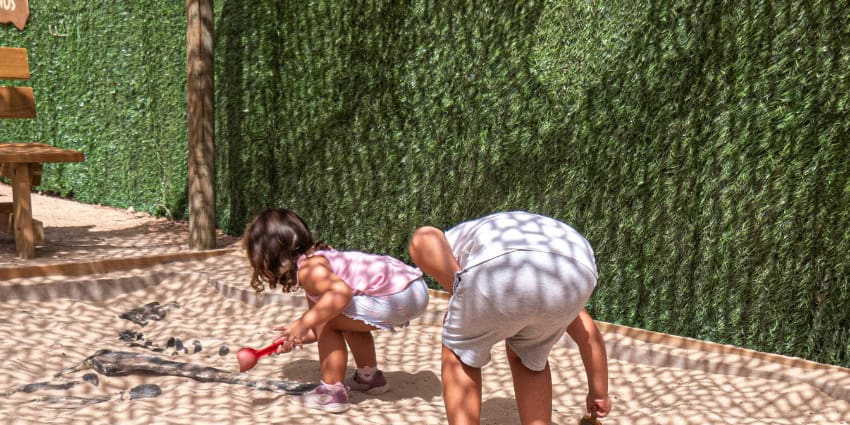
The Explorer Zone is a recreated palaeontology camp where children dig for fossil remains, with games and educational puzzles. It is included in the ticket.
It is, by a wide margin, where they stay longest. A six-year-old can spend forty minutes there without once looking up, and it is better to budget for that than to fight it. If the visit is starting to run long, leaving the Explorer Zone until the end solves the problem: it finishes when it is time to leave.
It works best between 4 and 10. The youngest ones enjoy it just as much without understanding what they are looking for, because the appeal is the digging.
The Ranger show, and the warning you will thank us for
Several times a day there is a live show hosted by the Ranger, in Spanish and in English. Times are announced at the park on the day itself, so the first thing to do on arrival is check when it is on and build your route around it.
The warning: the raptor moves among the audience and even climbs the steps of the seating area. Most children find it thrilling and it is the moment they remember best. For some between two and four it is a bit much. The fix is simple and it works: with the youngest ones, sit in the back rows. You see everything from there and nobody has to make a run for it.
Telling them beforehand what is going to happen helps more than you would think. A child who has been warned laughs; a child taken by surprise sometimes does not.
How long it really takes
The full visit is planned at around an hour and a half: the whole route among the dinosaurs, time in the Explorer Zone and the Ranger show.
That said, with children the sums change, and almost always upwards. Between stopping to look at the same dinosaur twice, the photos, the digging and the show, there are families who drift past the two-hour mark without noticing. And there are people who walk it in forty minutes, because the circuit is free-flowing and everyone does it at their own pace.
If you are coming with small children, the advice is not to chain it to another big plan on the same day. One activity in the morning and the beach in the afternoon works far better than two visits back to back.
What to bring
Comfortable shoes and that is it: the path is flat and flip-flops are perfectly fine. A hat and water in summer, even though much of the route is shaded. And sun cream on before you leave, because once you are inside nobody wants to stop and put it on.
The path is adapted, so it is no trouble with a pushchair or a wheelchair. There are toilets with baby-changing facilities, and parking is free and right at the entrance, though in July and August it fills up by mid-morning.
On food: you can bring your own food and drink, but there is no designated eating area inside the grounds. The picnic tables are outside. Inside the park you will find the Raptor Café, with drinks and snacks, and Fried Fossils, the soft drinks and curly-fries stand — the spiral potatoes almost every child ends up asking for. And at the entrance and exit there is Dinoburger, with smash burgers, salads and a children’s menu that comes with a gift.
If they still have energy left
On the same site, a couple of minutes’ walk away, are the Cuevas dels Hams. Entry is by timed slot, the visit lasts an hour and it is a constant 20 °C all year round, which in August is very welcome.
For children the moment is the underground lake known as the Sea of Venice, with the water completely still and its musical show, along with the formations that give the cave its name: needle-thin hooks that start growing downwards and, at a certain point, curve and rise again.
Two things to know before deciding: pushchairs cannot go into the caves — there is an area next to the ticket desk to leave them — and the route has 217 steps up and 148 down. With children who walk confidently it is no problem; with a baby in your arms, it is worth thinking about.
Tickets and prices
The ticket from 13 upwards costs €19.50 at the desk and €18.50 online. The child ticket, ages 3 to 12, is €13.50 and €12.50. Under-3s go free, up to two per adult over 18.
Buying online saves a euro per ticket and is the only saving available to the general public. A family of two adults and two children pays €62 buying online.
If you want to add the caves, the combined Dinos & Caves ticket covers both attractions on the same day for €26 per adult and €20 per child online. The full breakdown of rates and discounts is in tickets, prices and how to book.
🎟️ Book your tickets at tickets.dinosaurland.es and save €1 per ticket. Opening days vary by month: the up-to-date calendar is on dates and opening times.
Five things they would do differently a second time
From what families who come back tell us, this is what comes up most:
- Check the show time the moment you walk in and build the route around it, rather than finding out about it halfway round.
- Save the Explorer Zone for the end. Do it first and it takes twice as long to get them out, and you rush the rest of the park.
- Come early in July and August. Less heat, fewer people at the show and a parking space without circling.
- Show them the species pages at home. A child who arrives looking for the Ankylosaurus has a completely different visit.
- Do not chain two big plans on the same day. The park in the morning and the beach in the afternoon is the order everyone copes with best.
Frequently asked questions
From what age is it worth bringing children?
From about 2 they already enjoy it, because what impresses them is the size and the movement. The age band that gets the most out of it is 4 to 10, when the dinosaurs, the dig area and the show all land at once.
Are Dinoland and Dinosaurland the same thing?
Yes, a lot of people search for it that way. The correct name of the dinosaur park in Mallorca is Dinosaurland, and it is in Porto Cristo, on the Ma-4020 road towards Manacor at kilometre 11.
How long does the visit take with children?
Around an hour and a half, counting the route, the Explorer Zone and the Ranger show. With small children who stop a lot, allow a bit more: the circuit is free-flowing and every family does it at its own pace.
Do the dinosaurs move?
Many of them do. They are animatronic, with sensors that trigger as visitors approach: they turn their heads, open their mouths and make sound. It is what children remember most.
Does the show frighten small children?
Most find it thrilling, but the raptor does move among the audience and climbs the steps of the seating area. With children aged 2 to 4, sitting in the back rows and telling them beforehand what is going to happen solves 90 % of the scares.
What footwear do we need?
Whatever you find comfortable. The route is flat and works perfectly well in flip-flops or trainers, so no special footwear is needed.
Can we take a pushchair?
Yes. The route is adapted, wheelchairs included, and there are toilets with baby-changing facilities. Pushchairs cannot go into the Cuevas dels Hams: there is an area next to the ticket desk to leave them.
How much is it for a family?
Two adults and two children pay €62 buying online. With the combined ticket that adds the Cuevas dels Hams, €92. Under-3s do not pay.
Do we need to buy tickets in advance?
It is not compulsory, but online is a euro cheaper per ticket and in July and August it saves you the mid-morning queue at the desk.
Can we eat inside the park?
You can bring your own food and drink, although there is no designated eating area inside the grounds; the picnic tables are outside. Inside the park there is a café and the Fried Fossils stand, with soft drinks and curly fries, and at the entrance and exit there is Dinoburger, with a children’s menu.
What can we do afterwards?
Porto Cristo beach is five minutes away by car and the water is shallow, so it fits nicely as an afternoon plan. And the Cuevas dels Hams are on the site itself, without moving the car.
What they take away
Children do not come home from a day like this with facts. They come home with a sense of scale: the first time they understand, standing up with their neck craned back, what twenty metres actually means.
That is not something you learn from a book, which is why it lasts. Tickets are at tickets.dinosaurland.es.