
When we think of dinosaurs, images of fearsome carnivores with razor-sharp teeth or gentle giants grazing peacefully come to mind. But there was a group that refused to choose just one path: omnivorous dinosaurs. These prehistoric opportunists had an ace up their sleeve that allowed them to survive when others perished. Their secret? A flexible diet that included both plants and meat, adapting to whatever the environment offered at any given moment.
What Did Omnivorous Dinosaurs Eat?
Omnivorous dinosaurs had a far more varied menu than their specialized cousins. Their diet included everything from tender leaves, fruits, seeds, and roots to small mammals, lizards, insects, and the eggs of other dinosaurs. This dietary versatility made them natural survivors, capable of thriving in changing environments where resources were scarce. While a carnivore depended on hunting prey and an herbivore on finding abundant vegetation, omnivores could switch strategies depending on the season or food availability.
This adaptability not only gave them an advantage during difficult times but also reduced direct competition with other species. They could exploit ecological niches that other dinosaurs ignored, exploring both the forest floor for insects and tree canopies for fresh fruit. In fact, some paleontologists believe that this dietary flexibility was key to the survival of certain lineages during the climatic changes of the Mesozoic Era.
Types of Omnivorous Dinosaurs and Their Names
Among the most fascinating omnivorous dinosaurs we find species with very different characteristics.

Oviraptor, whose name means “egg thief,” was misunderstood for a long time. Although it was thought to only steal eggs from other nests, recent research suggests its diet included mollusks, fruits, and possibly carrion. Its toothless jaws with a powerful horny beak were perfect for cracking hard shells.
Ornithomimus, which resembled a prehistoric ostrich, was another notable omnivore. With its long hind legs, it could run at great speed to escape predators, while its front claws served to dig for roots or catch small animals. Its diet probably included plants, insects, lizards, and anything edible it found along the way.
Gallimimus, a close relative of Ornithomimus, shared these characteristics and has gained fame through its appearance in dinosaur movies.
We can’t forget Therizinosaurus, one of the strangest dinosaurs that ever existed. With claws reaching nearly one meter in length, this intimidating-looking giant was actually a peaceful omnivore that used its claws to strip branches and defend itself from predators. Its diet consisted mainly of plants, but fossil evidence suggests it supplemented its nutrition with termites and other protein-rich insects.
Adaptive Advantages of Being an Omnivore
Omnivory offered significant evolutionary advantages in a world as unpredictable as the Mesozoic. According to recent paleontological studies, omnivorous dinosaurs had higher survival rates during periods of environmental stress. When droughts reduced vegetation, they could turn to animal sources; when prey was scarce, plants saved the day.

This flexibility was also reflected in their anatomy. Many omnivores developed mixed dentition or versatile beaks, digestive systems capable of processing both plant matter and animal protein, and more complex foraging behaviors. They were natural explorers, constantly investigating their environment for new feeding opportunities.
Additionally, an omnivorous diet allowed these dinosaurs to colonize a greater variety of habitats. While herbivores were limited to areas with abundant vegetation and carnivores needed territories with sufficient prey, omnivores could settle in transition zones, mixed forests, or even more arid areas where specialization would have been a disadvantage.
Frequently Asked Questions About Omnivorous Dinosaurs
What is the most well-known omnivorous dinosaur?
Oviraptor and Gallimimus are probably the most famous, the latter thanks to its appearance in popular dinosaur films.
Were omnivorous dinosaurs dangerous to humans?
Humans and dinosaurs never coexisted. Dinosaurs became extinct 66 million years ago, while the first humans appeared approximately 2 million years ago.
Were all small dinosaurs omnivores?
Not necessarily. Although many small dinosaurs were omnivores, there were also specialized small carnivores and small herbivores.
Did omnivores hunt in packs?
Some, like Ornithomimus, show evidence of group behavior, although probably more for protection than for coordinated hunting like the large carnivorous theropods.
Discover More at Dinosaurland
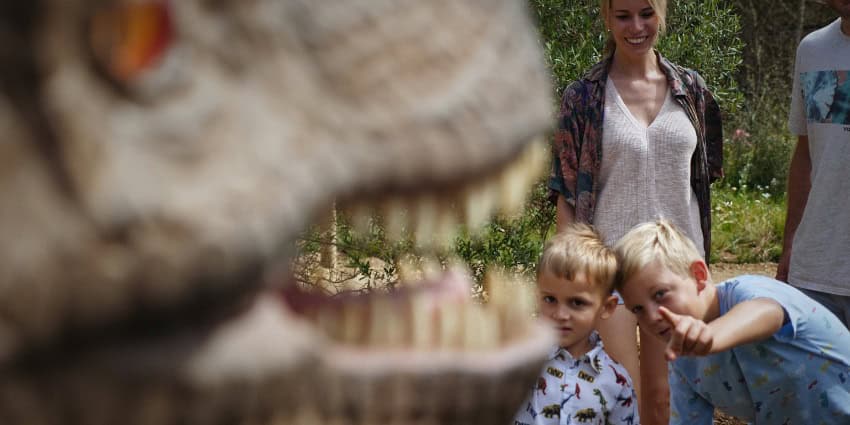
If you’re fascinated by the world of these incredible prehistoric reptiles, don’t miss the opportunity to see them at life size at Dinosaurland, your dinosaur park in Mallorca. Here you can observe replicas of over 100 different species, including some of these fascinating omnivores that knew how to adapt to the challenges of their time. To delve deeper into other aspects of prehistoric nutrition, we invite you to read our article about dinosaur feeding.