
From prehistoric giants to today’s survivors
Dinosaurs ruled the Earth for over 160 million years. Some were as tall as a three-story building, others no bigger than a chicken. But when a massive asteroid struck Earth 66 million years ago, their reign came to an end… or so we thought. Because although most dinosaurs went extinct, their legacy is still alive today. Not just in fossils, but in some of the animals that live around us.
In this article, we’ll explore what happened after the mass extinction, which creatures survived, and how some modern species are directly connected to dinosaurs. A fascinating story of evolution, adaptation, and survival.
What Happened to the Dinosaurs? Extinction and a New Beginning
The Cretaceous-Paleogene extinction, likely caused by an asteroid impact near present-day Yucatán, wiped out around 75% of Earth’s species—including almost all non-avian dinosaurs.
But not everything perished. Some animals survived, thanks to their size, adaptability, or sheer luck.
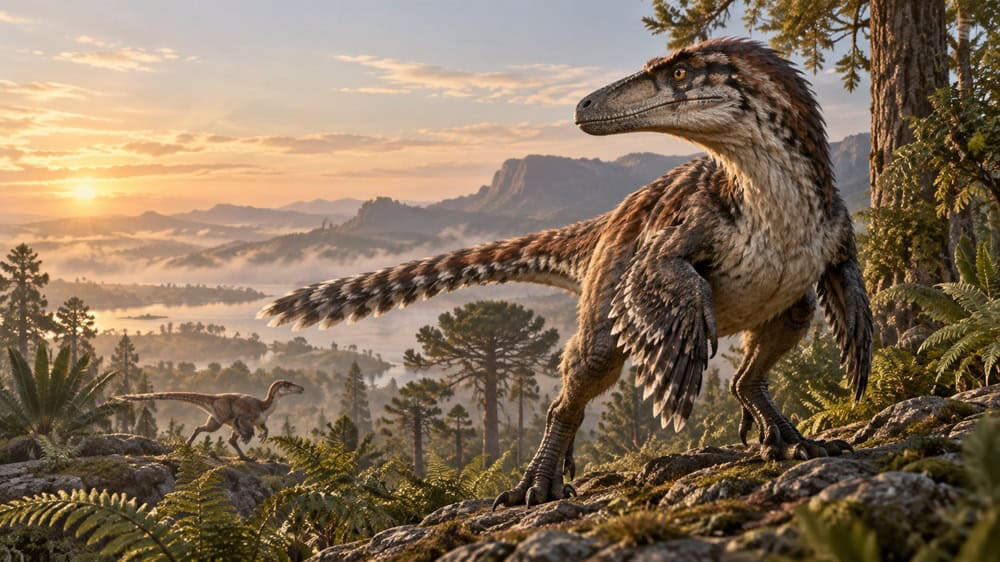
And the dinosaurs? Today we know that birds are their direct descendants. In fact, many modern birds evolved from small theropods, and their dinosaur heritage is scientifically proven.
Which Animals Survived the Dinosaur Extinction?
Many reptiles, fish, and mammals were affected too, but some Cretaceous survivors adapted and still live today. Here are a few incredible examples:
1. Crocodiles
They’ve been around for over 200 million years. Their slow metabolism, ability to go without food for long periods, and aquatic lifestyle helped them survive.
2. Turtles
Turtles were already swimming in prehistoric oceans. Their protective shells and flexible diet gave them a solid evolutionary advantage.
3. Sharks
Modern sharks descend from ancient ancestors. The Megalodon appeared millions of years after the dinosaur extinction, but its lineage began far earlier.
4. Birds
Yes birds are dinosaurs. Today’s sparrows, owls, and eagles are part of the avian dinosaur lineage, evolved from feathered theropods like Velociraptor.

👉 Want to learn more?
Check out our article on carnivorous, herbivorous, and omnivorous dinosaurs and their feeding evolution.
What Do Fossils Tell Us About Other Prehistoric Animals?
Beyond dinosaurs, the fossil record reveals a wide variety of prehistoric animals that lived before, during, and after the age of dinosaurs:
- Mammoths and mastodons, relatives of modern elephants, roamed until around 10,000 years ago.
- Pterosaurs, flying reptiles like Quetzalcoatlus, shared the skies with early birds.
- Giant amphibians such as Prionosuchus, which could grow up to 9 meters long.
- Ancient fish, some of which still resemble species alive today.
While not dinosaurs, these animals help paint a fuller picture of prehistoric life.
How Are Dinosaurs Related to Animals Today?
The clearest connection is with birds: hollow bones, bipedal stance, efficient lungs… all dinosaur traits.
But there are other signs too:
- The study of dinosaurs helps us understand modern animal behavior—such as parental care or territorial instincts.
- Some reptiles and birds show morphological features inherited from their prehistoric ancestors.
And thanks to dinosaur research, we’ve made advances in genetics, paleontology, and conservation that help protect today’s endangered species.
Are There Any Dinosaurs Alive Today?
Short answer: Yes. Birds are modern dinosaurs. Archaeopteryx, often called the missing link between dinosaurs and birds, had feathers, teeth, clawed wings, and a long bony tail. Today’s birds are the result of millions of years of evolution from creatures like this.

So while you won’t see a Tyrannosaurus rex walking around Dinosaurland (thankfully), you’ll find its relatives flying all around us.
In Summary: Evolution, Survival, and Legacy
Dinosaurs weren’t the only stars of the prehistoric world—but they left the deepest impression. Their story continues in fossils, in birds, and in our endless fascination with life’s origins.
Understanding how some species survived while others vanished helps us appreciate the delicate balance of life on Earth. Evolution is an ongoing story, and every living creature is part of it.
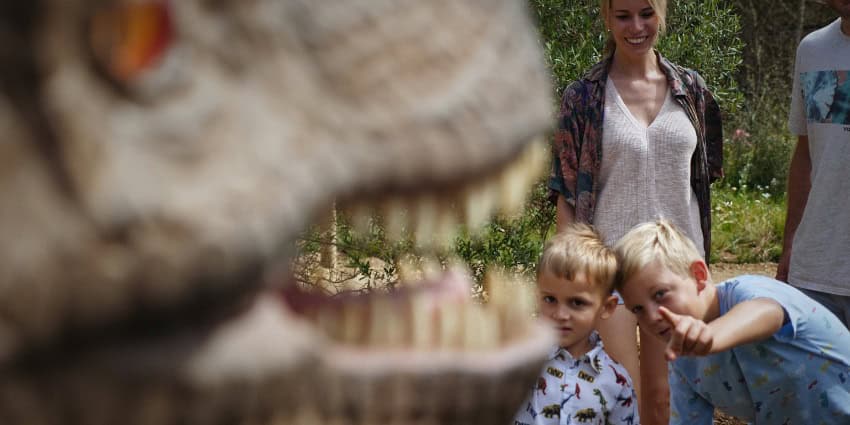
And if you want to see life-sized dinosaurs up close, visit Dinosaurland in Mallorca—where you can walk among giants and explore the prehistoric world in an unforgettable way.