
When we think of dinosaurs, it’s easy to imagine them in lush jungles or volcanic landscapes. But did you know that some dinosaurs also lived in cold climates? Although the Earth was generally warmer during the Mesozoic Era, there were still regions with cooler, even seasonal, weather. And yes — dinosaurs lived there too.
In this article, we’ll travel to the ancient poles of our planet to discover what kinds of dinosaurs lived in cold environments, how they adapted, and what science tells us about their lives in extreme conditions.
Did dinosaurs really live in cold regions?
Over millions of years, Earth’s climate changed dramatically. In the Cretaceous and Jurassic periods, areas like modern-day Alaska, Antarctica, and southern Australia experienced polar conditions with long winters, low light, and cool temperatures — though not the icy poles we know today.
Fossils found in northern Alaska, including hadrosaurs (duck-billed dinosaurs), ceratopsians and theropods, show that these animals didn’t just migrate — they lived and nested there. A study published in ScienceAlert reports the discovery of juvenile bones and eggshells, indicating that some species bred and raised their young in polar regions.
How did dinosaurs survive the cold?
While many details remain uncertain, scientists have identified three key adaptations that may have helped some species survive in cold climates:

1. Feathers and body insulation
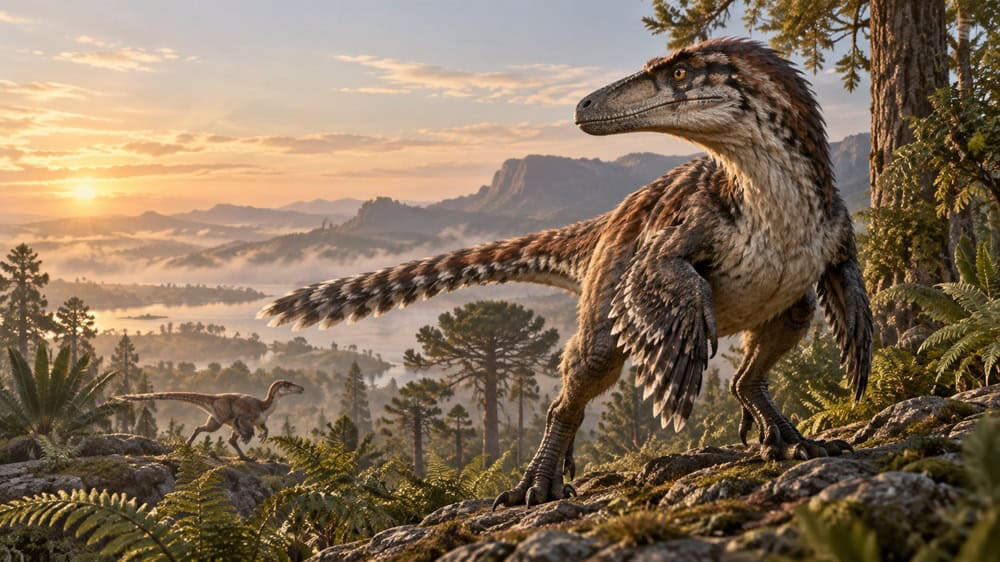
Many theropods — ancestors of modern birds — had feather-like structures. These may have served not for flight, but for insulation, like feathers do in birds today. The Kulindadromeus, found in Siberia, is a well-known example.
2. High metabolism
Unlike reptiles, dinosaurs likely had a faster metabolism, more like birds or mammals. This would help them generate body heat and remain active in cooler temperatures.
3. Group behavior and seasonal movement
Evidence from fossilized trackways suggests that some dinosaurs lived in herds — which could help conserve heat — and may have migrated to escape the harshest conditions.
Where were these cold-dwelling dinosaurs found?

❄️ Antarctica
Though it’s now frozen, Mesozoic Antarctica was covered in forests and inhabited by dinosaurs such as Cryolophosaurus — a 190-million-year-old predator.
❄️ Alaska
At the Prince Creek Formation, researchers found dinosaur nests and hatchlings, showing that some species lived year-round in the Arctic.
❄️ Australia
Southern Australia had polar forests during the Cretaceous. Dinosaurs like Leaellynasaura, with large eyes and long tails, may have been specially adapted for low-light winters.<
What do these discoveries teach us?
These findings break the myth that dinosaurs only lived in tropical environments. We now know that some species:
- Nested and raised young in long winters
- Had feathers or fur-like insulation
- Survived in polar ecosystems through evolutionary adaptations
They weren’t slow, heat-loving reptiles — they were dynamic, adaptable, and diverse.
Want to learn more about dinosaur life?
Check out our article on the classification of dinosaurs by diet, where we explore another fascinating side of prehistoric life.

And if you’re ever in Mallorca, don’t miss your chance to meet our life-sized dinosaurs face to face at Dinosaurland.
Dinosaurs didn’t just rule the Earth — they conquered the cold.