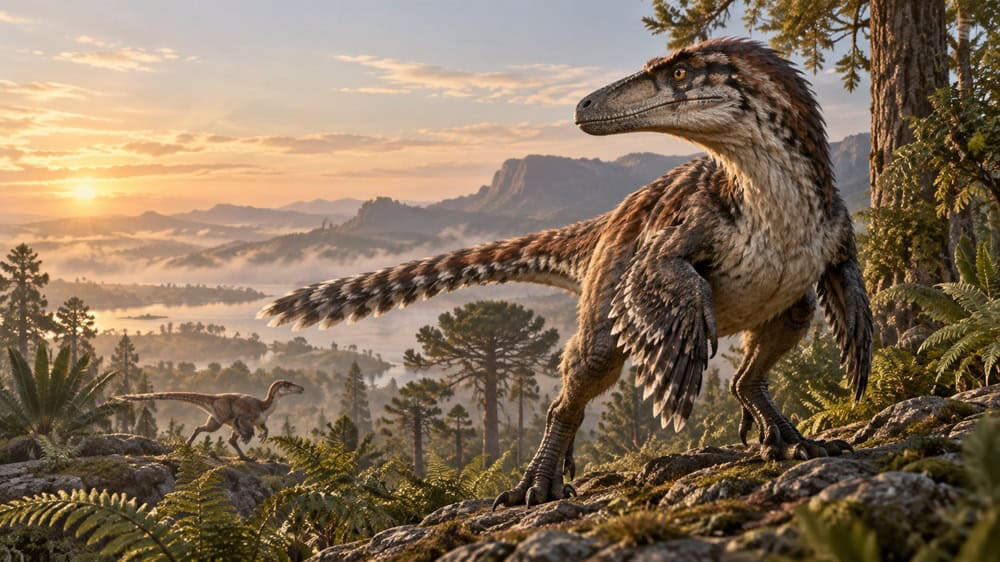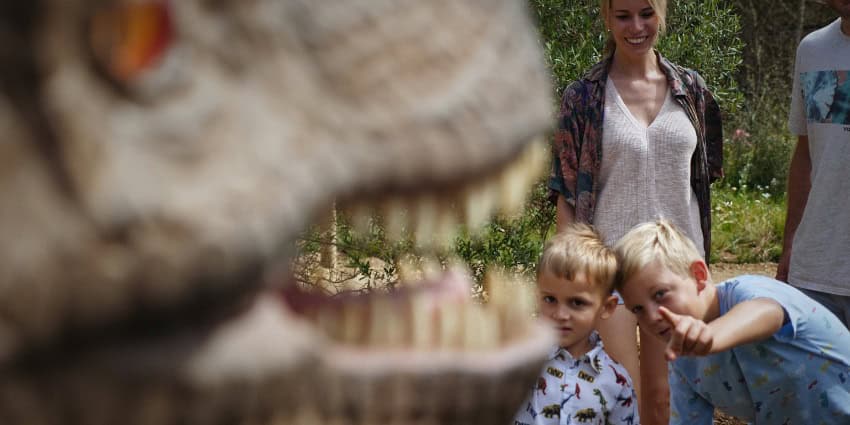
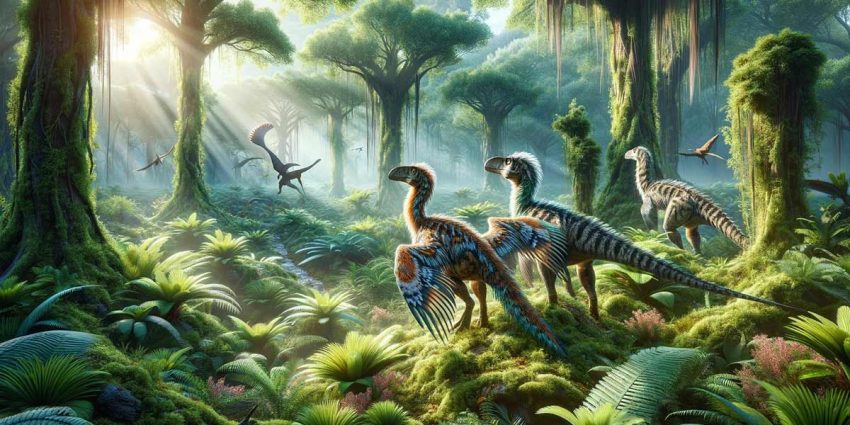
Hello, little adventurers of the prehistoric world! Today we’ll dive into an exciting journey back in time to explore the fascinating world of feathered dinosaurs. Yes, you read that right! Some dinosaurs were not only giant and fearsome, but they also had feathers like modern birds.
Índice
ToggleFeathered Dinosaurs: An Amazing Revelation
The classic image we have of dinosaurs, with their scales and reptilian appearance, has radically changed thanks to an incredible discovery: some dinosaurs had feathers! This revelation has transformed our understanding of what these prehistoric creatures were really like and has challenged many of our preconceived ideas about their appearance and behavior.
The first indication of the presence of dinosaur feathers dates back to the 1990s, with the discovery in China of fossils of theropod dinosaurs with filamentary structures that resembled feathers. One of the most notable discoveries was that of the Sinosauropteryx, a small predatory dinosaur that lived more than 120 million years ago. These fossils revealed a surprising connection between dinosaurs and modern birds.
The Diversity of Dinosaur Feathers
Dinosaur plumage was as diverse as that of modern birds. Some had long, stiff feathers, similar to those of birds of prey, which may have been used for flight or for courtship displays. Others had softer, more flexible feathers, which may have served as thermal insulation or to create more elaborate display structures.
The Role of Feathers in Temperature Regulation
Feathers play a crucial role in regulating body temperature. This function is essential for the survival and well-being of the creatures that possess them, as it allows them to adapt to a wide variety of environmental conditions and maintain an optimal internal temperature for their proper biological functioning.
One of the main functions of feathers is to provide thermal insulation. Feathers form an insulating layer around the animal’s body, creating a barrier that retains the heat generated by its metabolism. This is especially important in birds and dinosaurs living in cold environments, where they need to conserve body heat to keep their internal temperature within a suitable range.
Feathers are not a decorative accessory, but an adaptive tool that allows birds and feathered dinosaurs to survive in a variety of climates and environments. In cold climates, dense, tightly packed feathers provide greater thermal insulation, while in warm climates, lighter, more widely spaced feathers help dissipate heat and maintain a lower body temperature.
Can feathered dinosaurs fly?
This question is a fascinating topic that has long intrigued scientists and enthusiasts. While some feathered dinosaurs had features that could have aided them in flight-related activities, such as gliding or leaping, the actual ability to fly is a more complex and debated topic.
It’s crucial to recognize that not all feathered dinosaurs were necessarily adapted for flight. Some theropod dinosaurs, such as Archaeropteryx, have been identified with adaptations that may have allowed them to perform flight-related activities. These adaptations include asymmetrical wing feathers, hollow bones, and structures similar to those of modern-day birds. Additionally, some dinosaurs had structures in their limbs that could have served as attachments for flight muscles.
Theropod Dinosaurs: The Ancestors of Birds
Did you know that modern birds are direct descendants of theropod dinosaurs? That’s right! Feathered dinosaurs shared many characteristics with modern birds. Some even had bird-like bone structures, suggesting they were more closely related than we might imagine.
Types of Bird Feathers: A Great Diversity
Speaking of feathers, there are different types of feathers in modern birds. Some have soft, fluffy feathers to trap heat, while others have long, streamlined feathers to help them fly gracefully. Feathered dinosaurs could also have had a wide variety of plumage, adapted to their unique needs and lifestyles.
Feathered dinosaurs are exciting evidence of the incredible diversity and evolution of life on our planet. Their past existence reminds us that the prehistoric world was full of wonders and mysteries that we are still uncovering. The connection between feathered dinosaurs and modern birds shows us that the past and present are more intertwined than we might imagine. So the next time you see a bird flying, remember that it is carrying with it a legacy of millions of years of history.