Manacor is Mallorca’s second largest city, but it is nothing like Palma. There is no seafront promenade here, no cruise ships, no luxury shops facing the harbour. What there is, is an inland city of almost 50,000 people, an industrial tradition that has defined it for decades and a pace of life that has more to do with work than with tourism.
For much of the twentieth century, Manacor was synonymous with two things: artificial pearls and wooden furniture. The Majorica pearl factories put the city on the international map, and the cabinet-making workshops supplied furniture to half the Mediterranean. Today that industrial identity sits alongside a more recent one: being the hometown of Rafael Nadal, who has built his tennis academy and a sports museum here.
But Manacor is more than pearls and tennis. Its Monday market is one of the biggest on the island, its parish church has one of the tallest towers in Mallorca, and its municipal district includes Porto Cristo, home to the Cuevas del Drach and Dinosaurland.
History of Manacor: from craft to industry
Manacor’s origins go back to the Talayotic period (1300–123 BC), with several archaeological sites within the municipality. After the Roman conquest and the subsequent Muslim rule, the city took on its current form following the Catalan-Aragonese conquest of 1229.
For centuries, Manacor was a large agricultural town, centred on the cultivation of cereals, almonds and vineyards. The change came in the late nineteenth and early twentieth centuries, when two industries developed that transformed the local economy:
The pearl industry. In 1890, the German engineer Eduard Heusch founded Spain’s first artificial pearl factory in Manacor. The technique involved coating glass spheres with a pearlescent substance called essence d’Orient, obtained from fish scales. The company that took the industry to its peak was Majorica, founded in 1902, which perfected the process until the pearls were virtually indistinguishable from natural ones to the naked eye.
For decades, Majorica was Manacor’s biggest employer and its pearls were exported worldwide. At its height, the factory employed more than 1,000 workers. Production continues today, albeit on a smaller scale, and the brand remains a benchmark in pearl jewellery.
The furniture industry. Alongside pearls, Manacor developed a powerful wooden furniture manufacturing industry. Cabinet-making workshops multiplied during the first half of the twentieth century, specialising in Mallorcan-style furniture and hotel furnishings. Although the sector has lost ground to industrial competition, there are still active artisan workshops in the city.
What to see in Manacor
Church of Nostra Senyora dels Dolors
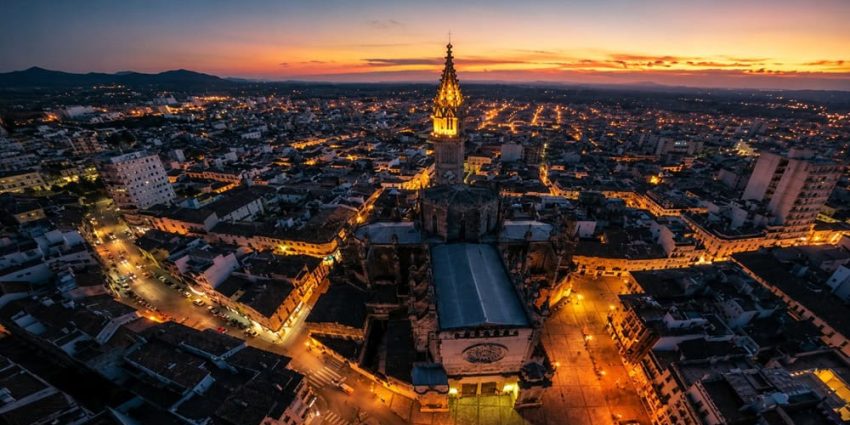
The most visible building in Manacor. Its 80-metre bell tower dominates the city skyline and can be seen from kilometres around. The current church, in neo-Gothic style, was built between the nineteenth and twentieth centuries on the remains of an earlier temple. The interior is spacious and austere, with a central nave of notable proportions.
Tower of Ses Puntes
A fourteenth-century defence tower, declared a Historic-Artistic Monument. Today it serves as an exhibition hall and cultural centre, with a regular programme of contemporary art. It is one of the few surviving medieval structures in the city.
Tower of the Palau
Remains of the tower of the old royal palace of Manacor, built in the fourteenth century by order of James II of Mallorca. Little more than the tower survives from the original palace, but it is a reminder of the importance Manacor once held as the administrative centre of eastern Mallorca.
Monday market
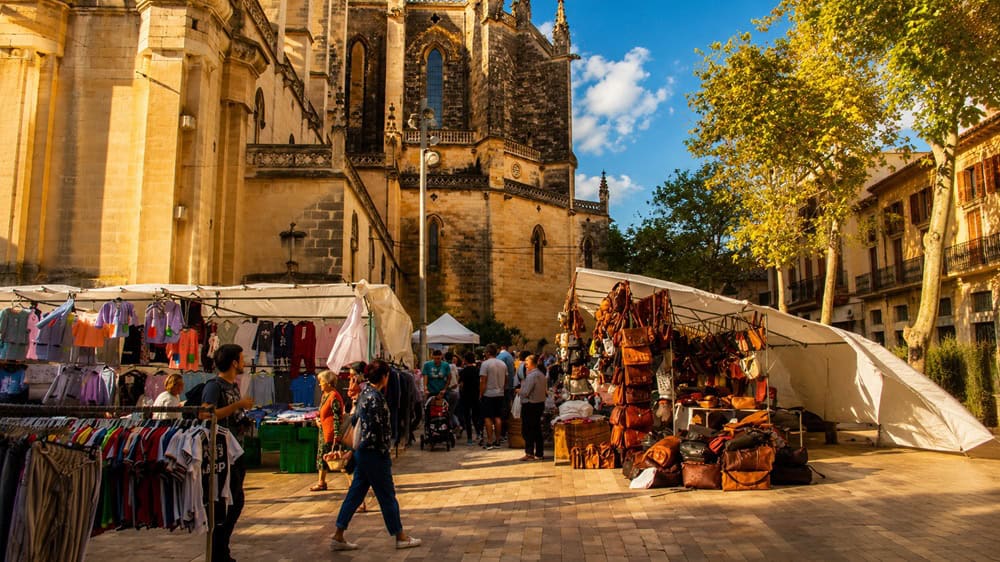
Every Monday morning, the centre of Manacor fills with one of Mallorca’s biggest markets. Stalls selling fruit and vegetables, cured meats, cheeses, clothing, crafts and local products take over several streets in the centre. It is a great opportunity to see the city’s local life and buy typical products at good prices.
Manacor is Mallorca’s second city and for decades was its industrial engine: Majorica pearls were exported worldwide and furniture workshops supplied the entire island. Today that heritage coexists with the Rafa Nadal Academy, which has turned the city into a global tennis reference.
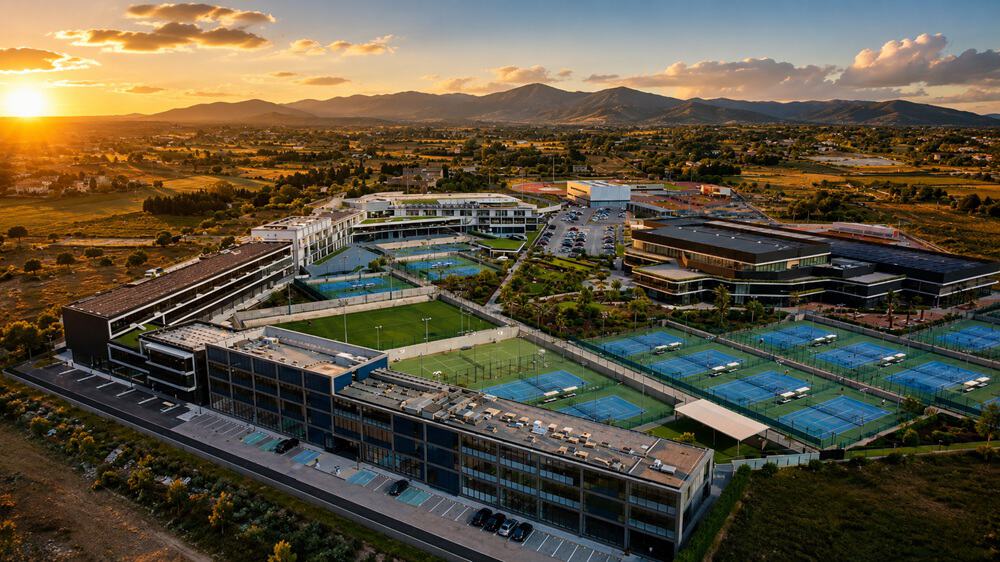
The Rafa Nadal Academy and the Xperience museum
Since 2016, Manacor has had another reason for international recognition. The Rafa Nadal Academy occupies a 24,000 m² complex on the outskirts of the city, with tennis courts on different surfaces, a fitness centre, student accommodation and an educational centre, as detailed on the academy’s official website.
The academy is not just an elite training centre. It also offers programmes for amateurs of all ages, summer camps and sports experiences for visitors.
Within the same complex is the Rafa Nadal Museum Xperience, an interactive space displaying the trophies and memorabilia from Nadal’s career, along with sports simulators and interactive activities. It is an outing that works well with children and teenagers, even if they are not particularly keen on tennis.
Porto Cristo: Manacor’s coast
Although Manacor is an inland city, its municipal district extends to the east coast, where you will find Porto Cristo. This coastal village, just 13 kilometres from the centre of Manacor, is known for the Cuevas del Drach, the Cuevas dels Hams and, of course, Dinosaurland.
Porto Cristo has its own character: a natural harbour, a pleasant seafront promenade, fresh fish restaurants and a fine-sand urban beach. It is the perfect complement to a morning in Manacor.
If you want to learn more about Porto Cristo and its surroundings, we recommend our article on the hidden gems of Porto Cristo near Dinosaurland, where we cover everything from viewpoints to the best restaurants.
Practical information
How to get there:
- From Palma: 50 minutes on the Ma-15 motorway (about 50 km).
- From the airport: 55 minutes via the Ma-15.
- From Porto Cristo: 15 minutes on the Ma-4020.
- Public transport: TIB line 412 from Palma (every 30–60 minutes).
When to go:
- Monday morning is the best day to visit Manacor if you want to see the market.
- For the Rafa Nadal Academy and museum, any day works (check opening times on the website).
- The best time of year is April to October, although Manacor is an inland destination that works all year round.
Estimated visit time: 3–4 hours for the city centre. If you include the Rafa Nadal Academy and Porto Cristo, you could easily fill a whole day.
Frequently asked questions about Manacor
What are Manacor pearls?
They are artificial pearls made using a technique developed in the late nineteenth century. The best-known company is Majorica, which produces pearls coated with layers of synthetic nacre over a glass core. The result is a pearl with the shine and feel of a natural one, at a fraction of the price.
Can you visit the Majorica pearl factory?
Majorica has a shop in Manacor where you can see pieces from the collection and buy jewellery. Access to the production area has varied over the years; it is best to check availability before you go.
Is Manacor worth visiting with children?
Yes, especially if you combine it with Porto Cristo. The ideal plan would be: Monday market in the morning in Manacor, lunch in Porto Cristo, and an afternoon at Dinosaurland or the caves. The Rafa Nadal Xperience museum also works well with children thanks to its interactive activities.
What is the connection between Manacor and Rafa Nadal?
Rafael Nadal was born and grew up in Manacor. Following his professional career, he built the Rafa Nadal Academyin his hometown, inaugurated in 2016, which includes a tennis training centre, an international school and an interactive museum. It is one of the most important sports centres in the Mediterranean.