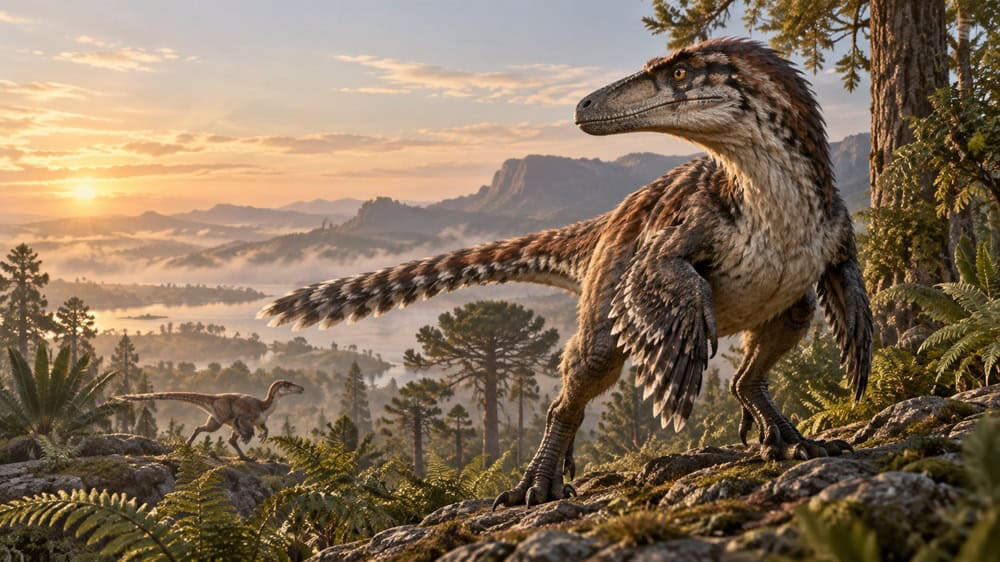
Mallorca is one of the jewels of the Mediterranean Sea, famously known for its great landscapes, coves, beaches and history. But has it ever occurred to you to think if this dream island was once a land inhabited by dinosaurs millions of years ago? In case you didn’t know, besides the great landscapes, there could have been dinosaurs in Mallorca. Let’s explore its geology.
Índice
ToggleDinosaurs in Mallorca?
Mallorca is an island made up of limestone and dolomite rocks, types of rocks that form over millions of years and geological processes. The island’s geological history is long, as long as the age of the dinosaurs.
There have been several occasions in which geologists have found evidence of remains from the Jurassic period, when dinosaurs ruled our planet. Not only on the seabed, where prehistoric underwater life would have lived, but also in the terrestrial environment.
Thus, fossil remains have been found, such as the Tramuntanasaurus, a new species from more than 270 million years ago. This reptile has been found thanks to rock research in Banyalbufar, in the southwest of the Sierra de Tramontana, which resulted in the discovery of a fossil skeleton in very good condition, about 50 centimeters long. This fossil would belong to a herbivorous reptile from the Permian period, known as a medium-sized moradisaurine captorrinid.
As reported by the Balearic Museum of Natural Sciences (MUCBO), the fossil of the animal was practically complete, with the bones “in anatomical position”, an uncommon fact in other fossils found from the period.
Thanks to the teeth preserved in the skeleton, more has been learned about the jawbone of this species, as what was known until now was from various discoveries of skulls and other parts in different parts of the world. Thus, it was discovered that Tramuntanasaurs possessed five rows of teeth on the upper and lower sides, designed to properly chew the vegetation they ate.
With facts like these, scientists cannot rule out the possibility that reptiles like those mentioned may have inhabited the island in the past. In fact, the island of Mallorca may have been connected to the European continent during the Jurassic or Cretaceous periods, providing an additional expanse of land for dinosaurs to roam.
To date, reptile fossils dating between 251 and 299 million years ago have been found, prompting scientists to continue researching the island. The diverse geology of the region, with its coves, caves, and mountain ranges, is an incentive for researchers, who have already managed to uncover important fossil remains and are therefore aware that new discoveries may be forthcoming. The new discoveries could support the theory that dinosaurs migrated through the area or even established a home in the region millions of years ago.
Dinosaur Tours in Mallorca
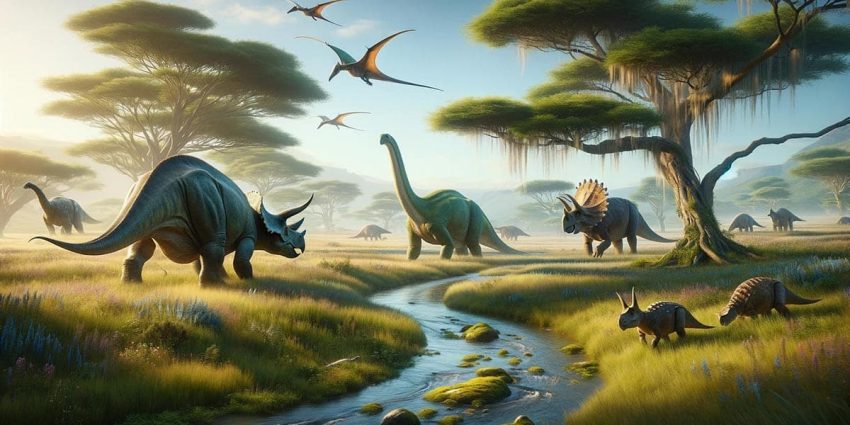
A recent dinosaur exhibition in Palma de Mallorca has brought the Jurassic creatures closer to people, 65 million years after their extinction. This journey back in time shows the great Tyrannosaurus Rex in real size, the Triceratops or the Spinosaurus. But the temporary exhibits are not the only thematic attraction you can see in the region.
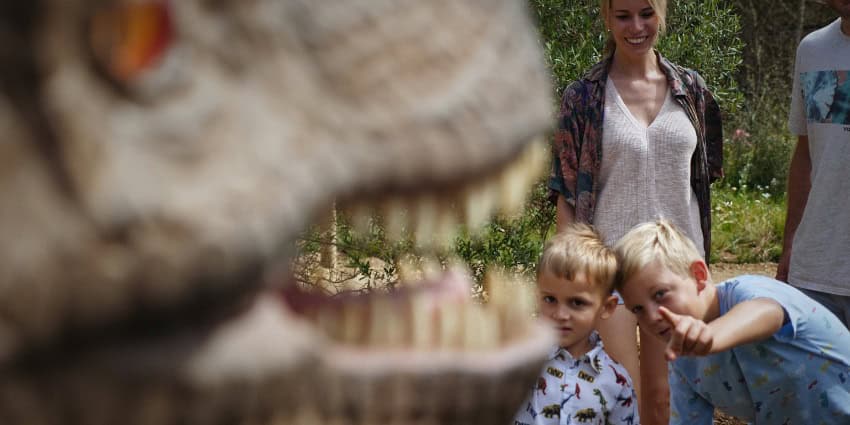
If you want to enjoy life-size recreations of these creatures you can come and visit us. Dinosaurland is located in the town of Porto Cristo, near the Hams Caves. In this dinosaur park you will see numerous figures of different sizes and species, some even with movement so that you can enter the prehistoric era of these great creatures. And is that in this great space of dinosaurs near Manacor we have beasts in real size, with information of the name, their food, height or habitat. Surely within these figures the one that impresses you most is the Titanosaurus, almost 50 meters, which in fact is the largest in the world. Inside the park you can enjoy shows, restaurants, theme stores and play areas for children, where they can feel like real archaeologists discovering dinosaur skeletons.
The geology and history of Mallorca is a fascinating journey with much still to be discovered, given the island’s past, its location, and the possible transit area of dinosaurs in the past. By exploring its geology, we’re sure to soon discover new fossils of creatures that once roamed the majestic Mallorcan land.