There are places in Mallorca where tourism arrived, stayed for a while and then moved on. Cala Figuera is one of them. This small fishing village on the south-east of the island had its heyday in the 1980s, when the hotels were full and coaches rolled in from Palma every morning. But in the 90s the numbers dropped, some hotels were demolished, and what was left behind was something far better: a village that got its calm back.
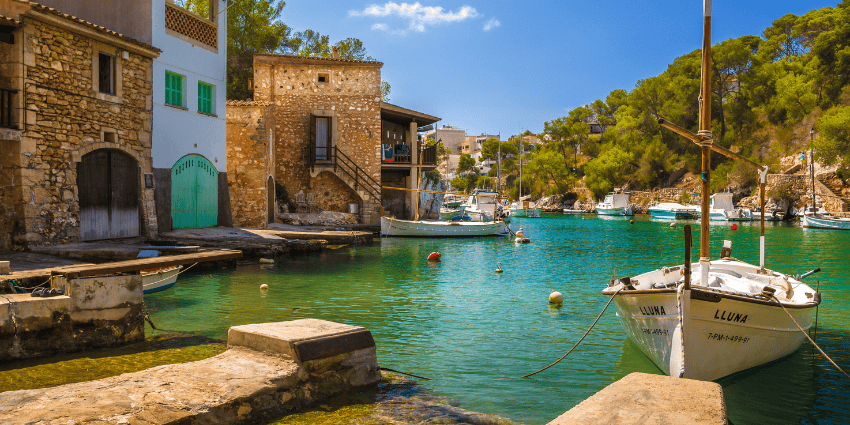
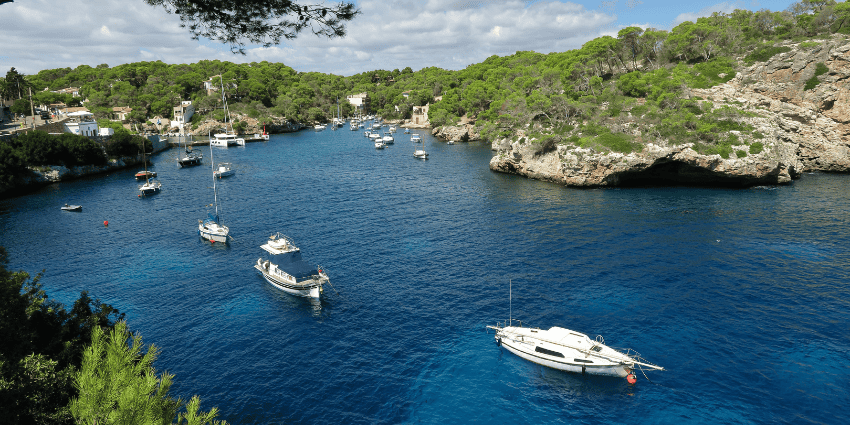
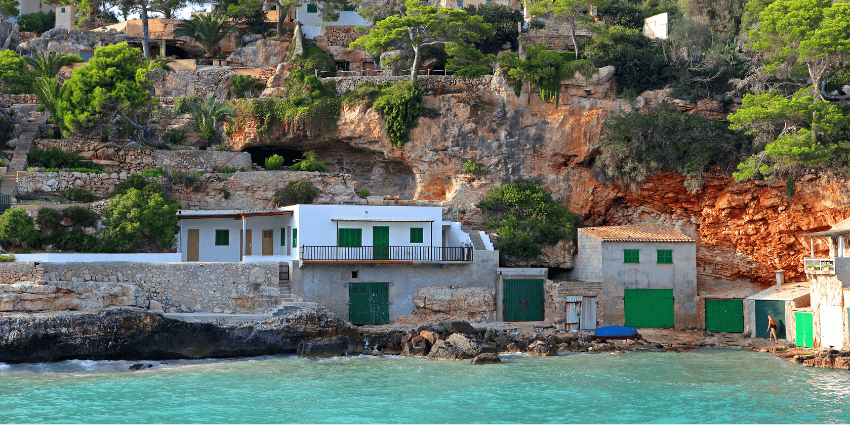
Today Cala Figuera is one of those spots that locals recommend when you ask them for somewhere “real”. It has no sandy beach. No beach bars or nightclubs. What it does have is a working fishing port, white houses with green shutters right at the water’s edge, and a narrow, deep inlet that looks like a miniature fjord.
If you are after the Mediterranean without filters, Cala Figuera is exactly that.
Where is Cala Figuera?
Cala Figuera belongs to the municipality of Santanyí, on the far south-east of Mallorca. It is roughly 60 kilometres from Palma (45 minutes on the Ma-19) and 35 kilometres from Porto Cristo (about 40 minutes on inland roads).
The village sits on a Y-shaped inlet, with two narrow arms of sea reaching into the rock. This geological formation is what gives the place its character: the houses were built directly on the low cliffs that line the inlet, with the boathouses right at water level.
The earliest records of the settlement date from 1306, according to the official Cala Figuera tourism website, although the first houses as we know them today were built in the late nineteenth century. The village’s first church dates from 1938.
What to see and do in Cala Figuera
The fishing port
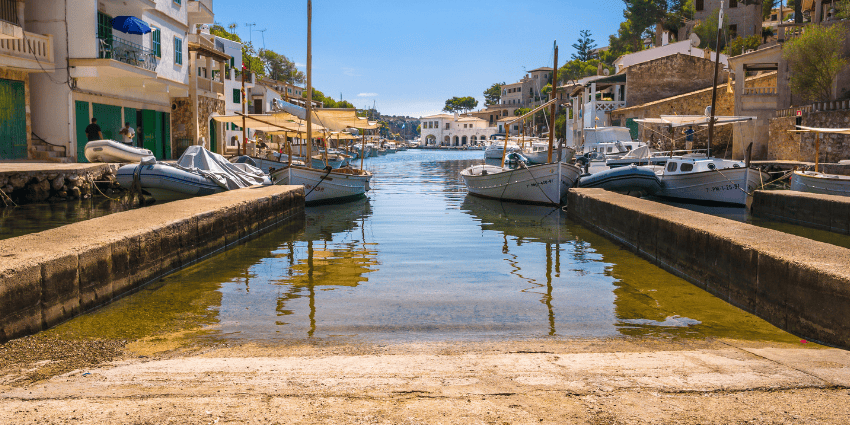
This is the heart of the village and its reason for being. Every morning, the fishermen head out before dawn and return with the day’s catch. If you arrive early (around 7:00–8:00), you can watch them unload the fish and prepare the nets for the following day. It is not a performance for tourists — it is the real activity of a port that has been operating for centuries.
The boathouses (casetas where the boats are stored) are carved into the rock at water level, and many have doors painted in bright colours. It is one of the most photographed sights in the village.
Walk around the cove
A pedestrian path runs along both arms of the cove, passing in front of the fishermen’s houses and offering views of the water from different angles. The full route is about 2 kilometres and takes less than an hour, but the stops to take in the scenery tend to stretch it out.
Torre d’en Beu
About 15 minutes on foot from the village centre, following the coast southwards, you reach this sixteenth-century watchtower built to spot pirates. Today it is a viewpoint with views of the open sea and the cliffs along the southern coast. There is a stone bench where you can sit and gaze at the horizon.
Nearby coves
Cala Figuera has no beach of its own (the cove is a port, not a swimming spot), but the surrounding area is home to some of the best coves in south-east Mallorca:
- Cala Santanyí: 5 minutes by car. White sand beach with turquoise water, sheltered by cliffs.
- Caló des Moro: 10 minutes. Small and rocky, spectacular, but accessed via a steep path.
- Cala Llombards: 10 minutes. Fine sand and crystal-clear water, less crowded than Cala Santanyí.
- Es Pontàs: the famous natural rock arch, visible from the coast between Cala Santanyí and Cala Llombards.
Cala Figuera has no sandy beach — it is a real fishing port, with boathouses carved into the rock and boats that head out to sea every morning. That is precisely what makes it special. Mass tourism left in the 90s and the village got its authentic character back.
Where to eat in Cala Figuera
The village has a dozen restaurants, most of them clustered around the port. The speciality, as you would expect, is fresh fish. Some have been running for decades and keep a menu based on whatever the boats bring in each day.
The typical setup is a terrace with water views, a fish and seafood menu, and prices that are moderate by Mallorcan coastal standards. This is not an area of Michelin-starred restaurants or avant-garde cuisine — people come here to eat well, no fuss.
A practical note: in high season (July–August), the port restaurants fill up quickly at lunchtime. If you do not want to wait, arrive before 13:30 or book ahead.
When to go and practical tips
The best time to visit Cala Figuera is from April to June and from September to October. During these months the village is lively but not overcrowded, the restaurants are open and the temperature is pleasant for walking (20–28 °C).
In July and August the village sees more visitors, but nothing like the numbers in places such as Magaluf or Cala Millor. Parking can be tricky at this time of year — there is a public car park at the entrance to the village, but it fills up early.
Some tips:
- Wear comfortable shoes. The walk around the cove includes stretches on rock and gentle slopes.
- Get up early if you want to see the fishermen. Port activity starts at dawn and is over by mid-morning.
- Combine with nearby coves. A visit to Cala Figuera takes about 2–3 hours. Spending the morning in the village and the afternoon at a nearby swimming cove is a perfect plan.
- Don’t expect a beach. Cala Figuera is for walking, eating and enjoying the scenery. Swimming happens at the neighbouring coves.
If you are exploring the south-east of Mallorca, we recommend our article on the south of Mallorca: sun, sea and culture, where you will find more suggestions to round out your route through this part of the island.
Frequently asked questions about Cala Figuera
Does Cala Figuera have a beach?
Not in the usual sense. Cala Figuera is a working fishing port with a narrow, deep inlet surrounded by rock. There is no sandy area for sunbathing. The nearest beaches are at Cala Santanyí and Cala Llombards, both less than 10 minutes away by car.
Is it worth visiting Cala Figuera with children?
Yes, as long as you adjust your expectations. Children usually enjoy watching the fishing boats, the colourful boathouse doors and the fish visible in the port’s clear water. The walk around the cove is easy and short. Combined with an afternoon at Cala Santanyí or Cala Llombards, it makes a good family outing.
How do you get to Cala Figuera from Porto Cristo?
From Porto Cristo, the most direct route is via the Ma-4014 to Felanitx and then the Ma-14 to Santanyí, from where you head down to Cala Figuera. The journey is about 35 kilometres and 40 minutes on secondary roads. There is no frequent direct public transport.
What does the name Cala Figuera mean?
It means “fig-tree cove” in Catalan/Mallorcan. The name refers to the fig trees that grew (and still grow) around the cove. There are several coves with this name in Mallorca, but the best known is the one in Santanyí.