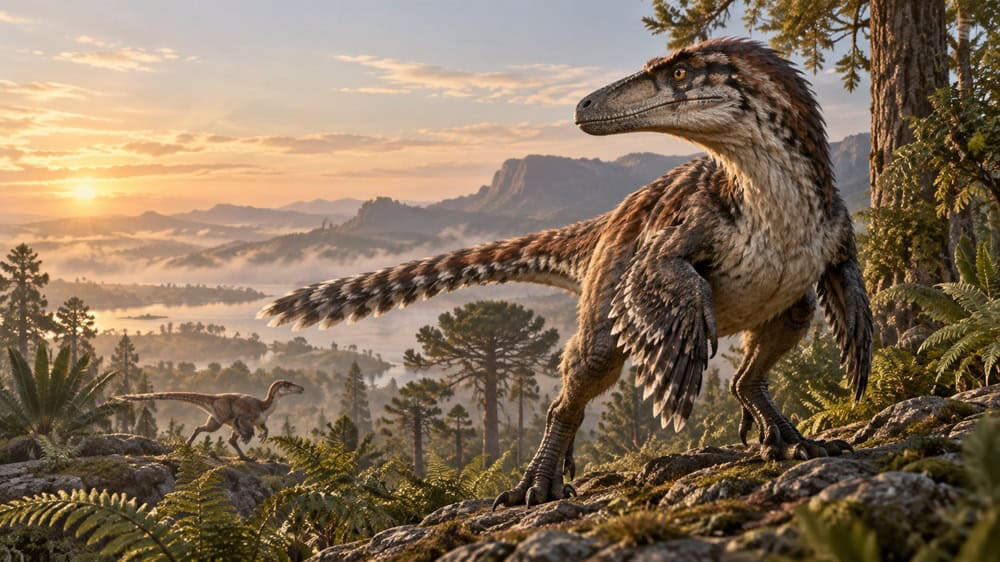
Dinosaurs are creatures that dominated planet Earth millions of years ago, when they became completely extinct. Their discovery was a breakthrough in the knowledge of the history of our planet, studying the food, behavior and development of these prehistoric beings. Let’s delve into the history of dinosaurs and prehistoric life, from the first reptiles to the giant creatures we all imagine.
Índice
ToggleThe Origin of the Dinosaurs
The origin of dinosaurs dates back to 245 million years ago, in a period known as the Triassic. At that time, the truth is that creatures of this species were not abundant, as they were just beginning to emerge. It took 13 million years after their origin for dinosaurs to establish themselves in the environment and thus rule our planet.
The truth is that, as happened with the extinction of the dinosaurs, studies suggest that the expansion of the dinosaurs was caused by a change in the Earth’s climate, which in turn caused the extinction of previous creatures. This event is known as the Carnian Pluvial Episode, which facilitated the life of dinosaurs on the planet. As a result of the disappearance of reptiles whose diet consisted mainly of plants, it benefited herbivorous dinosaurs that had enough food to develop (in fact, this benefited not only dinosaurs, but also the origin of species similar to those we now know as lizards, turtles or crocodiles).
The history of dinosaurs and their classification
Nature published a study stating that the area of the planet where the first dinosaurs may have appeared was in the northern hemisphere of the Earth, what is now the United Kingdom, further north than various theories claim.
This same study reflects a flaw in the classification of dinosaur genealogy, especially in the carnivores Tyrannosaurus rex and Velociraptor. 130 years ago, paleontologist Harry Govier Seeley divided dinosaurs into two groups:
- The ornithischians, which would be beings with hip bones very similar to the birds we know today. This group would include herbivorous dinosaurs, such as Triceratops or Stegosaurus.
- Saurischians, similar to reptiles. Here, there are both herbivores (Brontosaurus) and carnivores (the aforementioned Tyrannosaurus rex).
However, with the discovery of new fossils, the University of Cambridge claims that carnivorous beasts would be included within the ornithischians, marking a major departure from the old theory, which, if confirmed, would overturn all the most important books on the history of the dinosaurs.
Thus, these new fossils found in Scotland and England have confirmed that dinosaur species closer to the beginning of this species’ family tree lived there, 245 million years ago, in a region defined by the name of Laurasia, as we stated at the beginning of the article, and not 230 years ago, as the old theory maintains, in lands further south, such as Gondwana.
The Ages of the Dinosaurs
Having clarified the classification and origin of dinosaurs, let’s focus on the life and history of the various dinosaur ages. Briefly, to provide context, before the arrival of these prehistoric creatures, the Earth had lived through what we know as the Protozoic Era, during which it was a veritable sea of lava; and the Paleozoic Era, when the Earth began to divide into continents and more developed creatures began to emerge. It is at this point that the dinosaur lineage arrives, in the Mesozoic periods.
The Mesozoic era is divided into three phases: the Triassic, the Jurassic and the Cretaceous. The species that lived during these millions of years are numerous, and the first dinosaur is believed to be the predator Eoraptor, which is considered the ancestor of all the dinosaurs that came later.
We can imagine those small, agile, and varied reptilian creatures fighting each other to survive and compete for the strongest. Time passed, and the dinosaurs began to evolve and diversify, with different modes of behavior, reproduction, and feeding.
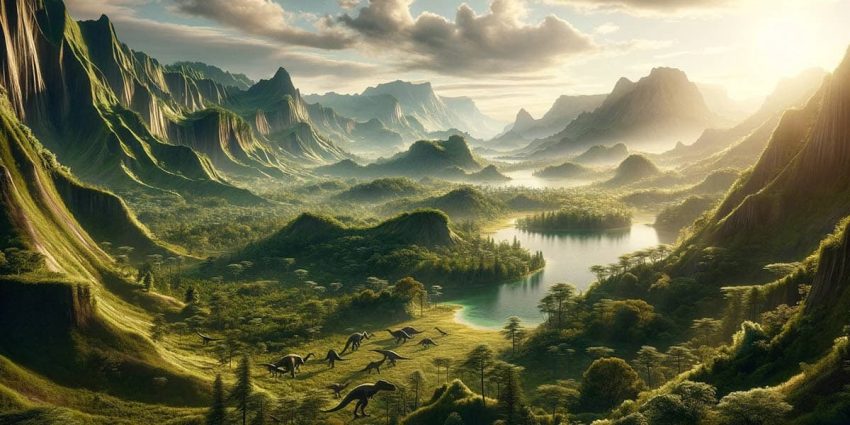
Thus, we arrive at the Jurassic and Cretaceous periods, periods in which dinosaurs reached their peak in size, variety, and territorial dominance. Here, we find everything from sauropods that climbed trees with great agility to the most predatory and swift beasts like the Tyrannosaurus rex, a giant that exemplified the power of creatures millions of years ago.
It was at the end of the Cretaceous period that the extinction of the dinosaurs began, 65 million years ago. Despite having endured great changes for millions of years, such as pressure from new species, climate change, and catastrophic events on the Earth’s surface, the reign of these incredible prehistoric beings came to an end.
But let’s not forget that dinosaurs lived on planet Earth for more than 160 million years. To get an idea, compare this period with the human era, as the first hominids emerged 2.5 million years ago, and you’ll realize the magnitude of the dinosaur legacy.
Today, we have fossils that prove the existence of that era and give us clues about the origin, history, and evolution of dinosaurs. However, we don’t just have these fossils, but also many of their descendants, animals that survived extinction and have evolved over thousands and millions of years to become the birds we see today, for example.
In short, the history of the dinosaurs is a tale of the survival and adaptation of species to life on Earth, from small, harmless reptiles to the great carnivorous giants that once ruled the prehistoric landscape.