
Mallorca hides beneath its dry-stone terraces a treasure that has nourished the island for over two thousand years: olive oil. With more than 750,000 olive trees — 90% of which are over 500 years old — this island produces one of the most distinctive oils in the Mediterranean.
What many visitors don’t realise is that they can tour centuries-old oil mills, join guided tastings and take home a bottle of Mallorca olive oil with a Protected Designation of Origin that’s almost impossible to find outside the Balearic Islands.
A thousand-year legacy among ancient olive groves

Roman and Arab roots
Olive cultivation in Mallorca dates back to Roman times, but it was during the Arab period that olive groves spread across the entire Serra de Tramuntana. The word «tafona», used locally to describe olive mills, comes from the Arabic «tahona» — a linguistic trace that reveals this heritage.
Walking among these ancient olive trees, with their gnarled trunks scattered across the dry-stone terraces — a UNESCO World Heritage Site — is like stepping directly into the island’s agricultural soul.
During the 17th, 18th and 19th centuries, Mallorca’s olive oil was the island’s main export. It was even used as a form of currency to import wheat, accounting for over 65% of the island’s total exports.
Generations of local farmers have tended these trees using traditional methods passed down from parent to child, shaping a cultural landscape that defines the identity of the Tramuntana to this day.
The DOP Oli de Mallorca
Official recognition came in 2002, when Mallorcan extra virgin olive oil was awarded the Protected Designation of Origin Oli de Mallorca. This seal guarantees that every bottle meets strict quality controls from harvest to bottling.
Today, more than 700 olive growers and eleven registered mills operate under this quality mark. In 2024, sales hit a record 374,000 litres — an 18.3% increase on the previous year.
Three olive varieties, three unique personalities
The richness of Mallorca olive oil lies in its three varieties authorised by the DOP, each with an unmistakable character.
-
- Mallorquina: the native variety Grown for centuries on the Tramuntana terraces, it produces a smooth, sweet oil with a flavour reminiscent of ripe almonds. Its high oleic acid content places it among the healthiest varieties in the Mediterranean.
- Arbequina: herbal freshness It brings a touch of green fruit, with herbal nuances and a gentle peppery kick at the back of the throat. It thrives particularly well on the flat plains of the Pla de Mallorca, where the drier climate concentrates its aromas.
- Picual: bold character More intense and full of personality, it delivers peppery and bitter notes that expert palates especially appreciate. The blend of all three varieties allows each mill to create unique coupages that reflect the terroir of its area.
Depending on the ripeness of the olives at harvest, two types of oil are produced: the fruity variety, from green olives, with intense aromas and a slightly peppery taste; and the sweet variety, from ripe olives, milder and rounder, perfect for dressing salads or drizzling over local peasant bread.

Fun fact: The Mallorquina variety has a strong alternate-bearing character, meaning it alternates between bumper harvests and years of almost no yield at all. This natural irregularity, combined with the complexity of mountain olive farming, is precisely what makes Mallorcan oil such a rare and distinctive product.
Oil mills you can visit in Mallorca
One of the best ways to understand Mallorca’s olive oil is by visiting the mills where it’s made. Several estates open their doors year-round with guided tours, tastings and gastronomic experiences.
- Aubocassa (Manacor) It combines a guided walk through its historic olive grove with a tasting of premium oils. The visit lasts around 90 minutes and covers the entire process, from hand-picking to cold pressing. Its location near Porto Cristo makes it an ideal stop to round off a day exploring eastern Mallorca,
combining food, nature and culture. - Son Mesquidassa Also in the eastern part of the island, it aspires to become one of Europe’s leading olive oil routes. The tour invites you to discover the oil-making process with all five senses, from grove to bottle.
- Son Catiu (Inca – Llubí) Home to the island’s largest and most modern olive press, opened in 2008. It includes a shop, tasting area and a restaurant where you can try the traditional pa amb oli made with their own oil.
- Family-run mills in the Tramuntana For those seeking something more intimate, the small family mills of the Serra de Tramuntana offer visits where the producer personally explains every step. In autumn, during the harvest between October and December,
some estates let you join the olive-picking — an activity that families with children find particularly magical.
How to spot a quality Mallorca olive oil
Choosing a quality extra virgin olive oil from Mallorca is easier than it sounds once you know what to look for.
The DOP seal as your guarantee
The most reliable indicator is the DOP Oli de Mallorca seal, which certifies origin, production method and quality verified by an independent body. Over a hundred brands are authorised under this label.
Tasting in three steps
Look for three sensations: fruitiness on the nose, gentle bitterness on the palate and a mild peppery tingle in the throat. These three qualities in balance indicate a fresh, high-quality oil.
If the flavour reminds you of almonds or freshly cut grass, you’re most likely tasting a Mallorquina or Arbequina oil.
Proper storage
Unlike wine, extra virgin olive oil doesn’t improve with age. The fresher it is, the better it retains its properties. Store it between 15 and 20°C, away from direct light and heat.
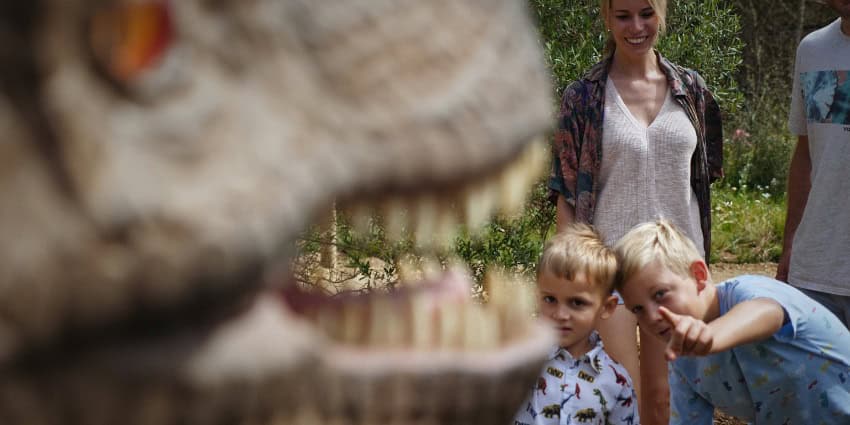
After a morning among centuries-old olive trees, round off your day with a visit to Dinosaurland in Porto Cristo, just minutes from mills like Aubocassa. Walk among over 100 life-sized dinosaurs and discover what life on our planet looked like millions of years before the first olive trees took root on this island.
Frequently asked questions about Mallorca olive oil

What makes Mallorca olive oil special?
Mallorca olive oil has held a Protected Designation of Origin since 2002, a seal that certifies its quality and production method. It’s made from three varieties — Mallorquina, Arbequina and Picual — grown on over 750,000 centuries-old olive trees. Its unique flavour reflects the island’s Mediterranean terroir, with notes ranging from sweet almond to herbaceous pepper.
Where can you buy DOP Oli de Mallorca?
You can buy it directly at the eleven registered mills, at gourmet shops across the island and at local markets such as Sineu, Santa Maria and Inca. Most of the production is consumed within the Balearic Islands, so taking a bottle home is a genuine gastronomic souvenir that’s hard to find anywhere else.
Can you visit olive oil mills in Mallorca with children?
Many Mallorca oil mills welcome families with children throughout the year. Aubocassa in Manacor and Son Mesquidassa offer tours where little ones can see the olive trees up close. During the harvest, between October and December, some estates organise special family activities.
When is the best time for an olive oil route in Mallorca?
The harvest season runs from October to December and is the most exciting time to visit working mills. However, tastings are available all year round. Spring is particularly lovely for walking among the Tramuntana olive groves, with green fields and pleasant temperatures.